
On this page
Candidates always ask it in the final interview round: 'what will my Tuesday actually look like?' Here's the honest answer, hour by hour.
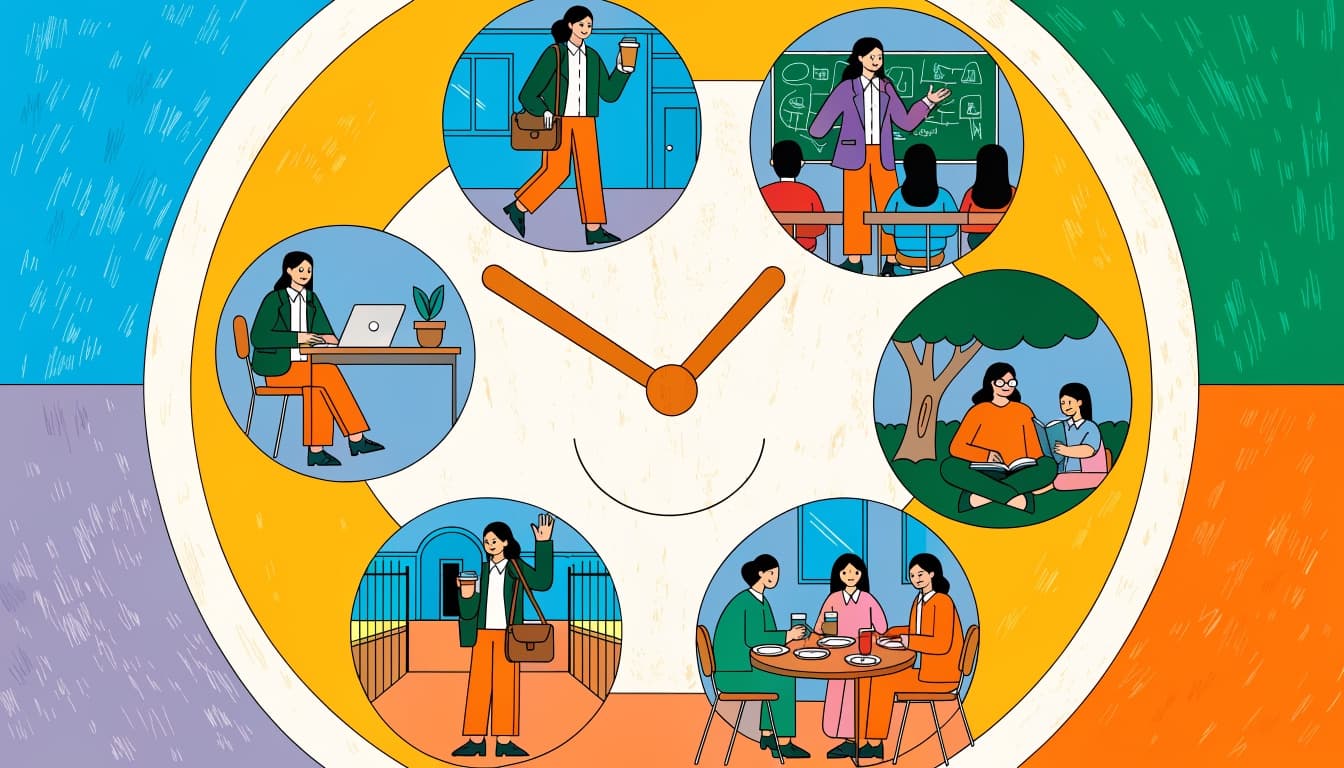
In final-round interviews, once salary and role are settled, nearly every candidate asks a version of the same question: what will my actual day look like? It's the right question — job descriptions describe the role, not the life. So here's an honest composite Tuesday for a TGT at one of our Bangalore campuses, assembled from how our teachers actually describe their days.
The day, hour by hour
- 17:40 — Arrive. Coffee in the staffroom, a ten-minute scan of today's lesson flow. Because the deck and worksheets were finished in yesterday's free periods (more on that below), this is review, not scramble.
- 28:10 — Assembly, then first bell. Teaching periods run about 40 minutes; a full teaching load is typically 5–6 periods across the day, never back-to-back-to-back all day — the timetable protects free periods by design.
- 310:30 — Free period one: marking yesterday's Grade 8 quiz. An AI-assisted first pass has already sorted responses by error pattern, so the period goes into writing real feedback on the ten scripts that need a human eye, not ticking 40 papers.
- 412:30 — Lunch with your grade team. Half social, half the fastest problem-solving forum in the school: the Grade 8 English teacher knows exactly why your 8B class was scattered today.
- 51:10 — Afternoon periods. The post-lunch Grade 7 class gets the activity-heavy lesson plan — that's deliberate; you learn to sequence energy, not just content.
- 62:40 — Free period two: tomorrow's prep. Drafting a worksheet with an AI assistant from your own last-year materials, then editing it to fit this year's class — twenty minutes instead of ninety.
- 73:30 — Students leave. A parent call, a mentoring chat with the fresher you're inducting, or a department huddle on next week's assessment.
- 84:15 — Most days, you're done. Board season and event weeks run longer — honesty demands saying so — but the default day ends with daylight left.
What 'AI-native' means on a Tuesday
Not robots teaching children. It means the repetitive third of the job — first-draft worksheets, first-pass marking, differentiated versions of the same exercise, parent-update drafts — is accelerated by tools, and the hours saved are deliberately returned to the human third: feedback conversations, mentoring, actual teaching. Teachers get trained on this in their first term; nobody is expected to arrive fluent. The full picture of what we do and don't use AI for is in how teachers actually use AI.
What surprises teachers who join us
“At my previous school I did my marking at the dining table at 9 pm. Here it fits inside the timetable. It took me a term to stop feeling like I was forgetting something.”
- The timetable is the workload policy. Protected free periods and realistic loads aren't perks; they're how the school ensures prep and marking happen inside working hours.
- Mentoring is structured, not luck. Every new teacher gets a named mentor, observed lessons with actual feedback, and a first-year development plan — the growth ladder in our career guide starts on day one.
- Collaboration is the culture's spine. Materials are shared by default; the department that plans together, marks lighter.
- The calendar breathes. Sixty-plus holiday days a year, and summer pay treated the way it should be. The specifics live on the Benefits page.
The honest fine print
Some seasons are heavier: board-exam months for Grades 10 and 12, the annual-day fortnight, report week. Parent conversations occasionally run past 4:30. And the first year at any new school — including ours — is real work: new curriculum rhythms, new systems, a mentor watching your lessons. What we can promise is that the default Tuesday looks like the one above, and the school treats teacher time as the scarce resource it is. Want to see the campuses where these days happen? Start with Life at NCFE.
Four campuses, published pay bands, a demo class where we'll show you the staffroom too. The final stage of our hiring process includes meeting the team you'd actually work with.
Browse open roles →